ABOUT OUR PROGRAM
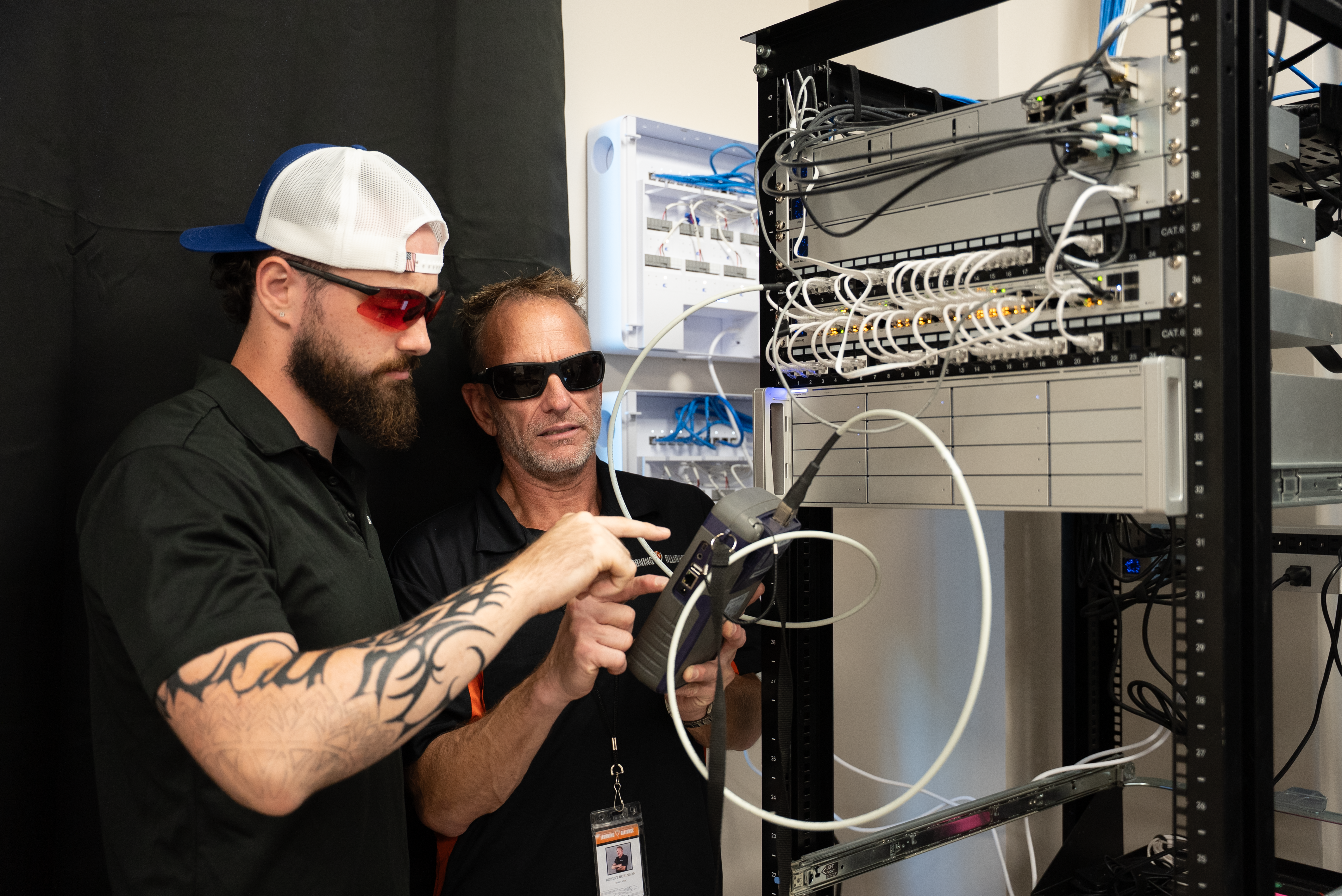
The Broadband Data Center Technician program is a comprehensive 400-hour training course designed to prepare individuals for entry-level roles in the fast-growing field of data center operations and infrastructure. This hands-on and lecture-based program equips students with the essential technical knowledge and practical skills required to install, maintain, and support the physical and environmental systems that keep data centers running efficiently.
Through focused instruction on topics such as power distribution, cooling strategies, cabling architecture, fire protection, physical security, and redundancy planning, students gain a deep understanding of how modern data centers are designed and operated. The curriculum also covers the core principles of data center topology, uptime availability, generator systems, and infrastructure management tools.
Emphasizing real-world application, this program trains students to work safely and effectively in complex environments where uptime and precision are critical. Graduates will be well-positioned to pursue careers supporting enterprise, hyperscale, and edge data center environments as skilled broadband data center technicians.
POWER THE DIGITAL WORLD
Train for In-Demand Roles in Data Center Operations & Infrastructure
Start your journey toward a career in enterprise, hyperscale, and edge data centers.
Where Graduates Work
Graduates are well-positioned to pursue careers supporting enterprise, hyperscale, and edge data center environments as skilled broadband data center technicians, installing, maintaining, and supporting the physical and environmental systems where uptime and precision are critical.
DATA CENTER FOUNDATIONS & OPERATIONS
Topology, availability, infrastructure management, change management and MOPs, and documentation.
BDC100, BDC101, BDC116, BDC123, BDC124
POWER, GENERATORS & BACKUP
Power fundamentals, generators, redundancy, PDUs and RPPs, and UPS/ATS and battery safety.
BDC107, BDC108, BDC110, BDC111, BDC112, BDC121
COOLING & AIRFLOW
Cooling fundamentals, humidity, cooling layouts, room/row/rack cooling, containment, and CFD.
BDC104, BDC105, BDC109, BDC114, BDC115
CABLING, RACKS & NETWORK
Cabling strategies, racks, leaf-spine networks, fiber termination and testing, and copper certification.
BDC103, BDC113, BDC118, BDC119, BDC120
SAFETY, SECURITY & MONITORING
Fire protection, physical security, DCIM monitoring, access control and surveillance, and ESD and lift practices.
BDC102, BDC106, BDC117, BDC122, BDC125
CAPSTONE: ROW BUILD, TURN-UP & ACCEPTANCE
A full mini-row build, from racks and power to certified links and an acceptance packet.
BDC126
Program Curriculum
27 courses · 400 clock hours · Select a course to see what you'll learn.
BDC100Fundamentals of Data Center Topology20 hrs
Introduces how modern data centers are organized from gray space to white space, including rooms, rows, racks, and cable pathways. Students learn Tier concepts, fault domains, and the roles of power, cooling, and network fabrics so every later task maps to the big picture.
BDC101Fundamentals of Availability12 hrs
Covers reliability patterns such as N, N+1, and 2N; maintenance windows; and failure domains. Learners analyze real incidents to see how redundancy, isolation, and procedures protect uptime and guide design choices.
BDC102Examining Fire Protection Methods in the Data Center10 hrs
Explains detection and suppression systems—spot, air-sampling (VESDA), pre-action/dry pipe, and clean agents—plus code and inspection basics. Emphasis is on protecting equipment while preserving human safety and compliance documentation.
BDC103Fundamentals of Cabling Strategies for Data Centers20 hrs
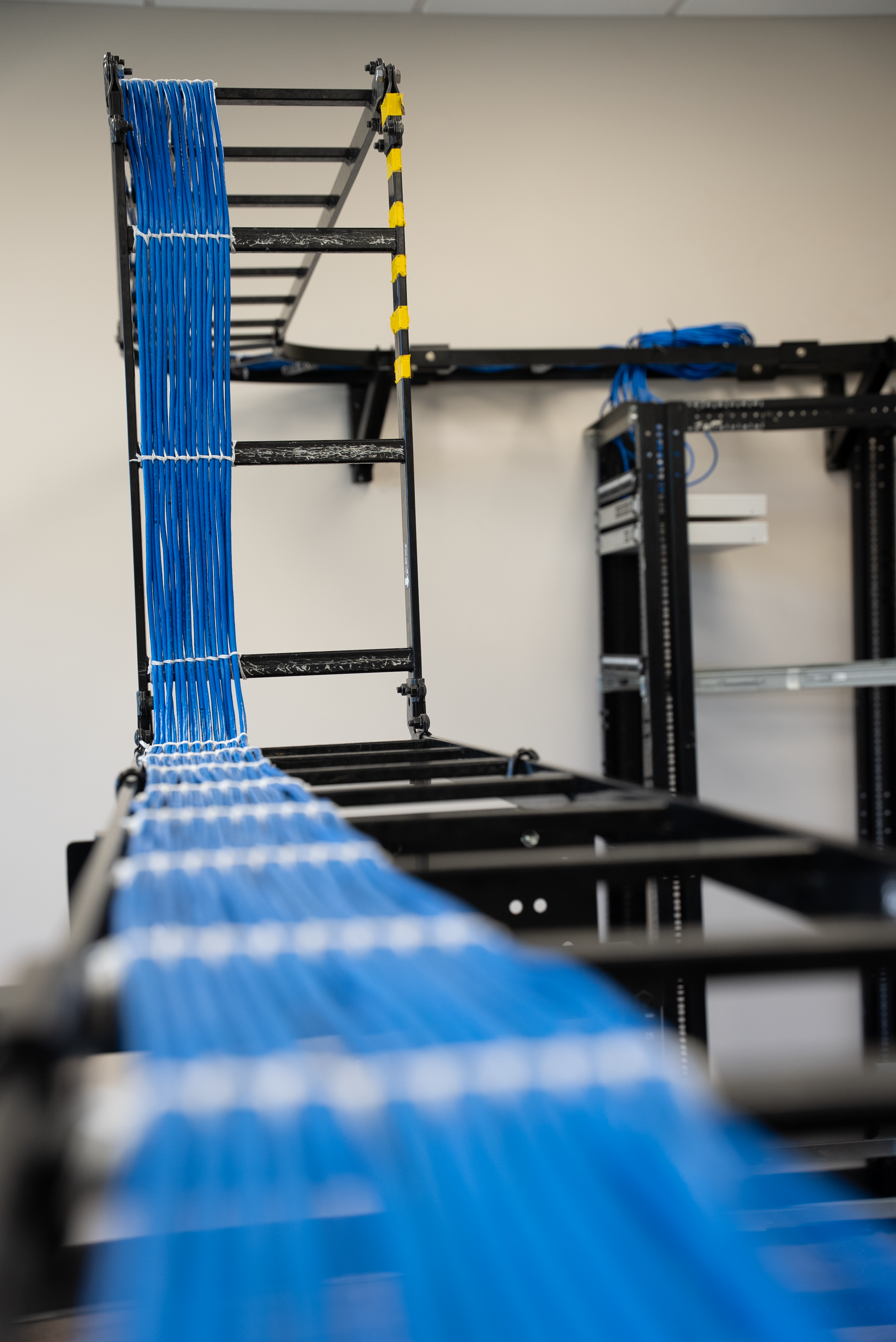
Students plan structured cabling to TIA-942/BICSI practices, select media, and route neatly through trays and racks. Bend-radius control, labeling, color standards, and service loops are reinforced to reduce faults and speed moves/adds/changes.
BDC104Fundamentals of Cooling I16 hrs
Builds thermal intuition: heat loads, airflow, CRAC/CRAH operation, DX vs chilled-water, and hot/cold aisle discipline. Learners measure temperature/airflow and identify common causes of hotspots and bypass air.
BDC105Fundamentals of Cooling II: Humidity in the Data Center12 hrs
Focuses on psychometrics, dew point vs relative humidity, and condensate management. Students configure humidification/dehumidification strategies that protect hardware without wasting energy.
BDC106Fundamentals of Physical Security12 hrs
Covers layered security: perimeter, mantrap, access control, surveillance, visitor workflows, and audit trails. Learners align daily practices with compliance requirements while maintaining safe, efficient operations.
BDC107Fundamentals of Power16 hrs
Introduces electrical one-lines from utility to IT load: service entrance, switchgear, transformers, panels, grounding/bonding, and power quality. Students read nameplates and verify basics like phase, voltage, and load balance.
BDC108Generator Fundamentals16 hrs
Explains generator components, fuel systems, start sequences, and testing with load banks. Learners practice safe lockout/tagout interfaces and interpret alarms so generators integrate cleanly with ATS/UPS.
BDC109Optimizing Cooling Layouts for the Data Center12 hrs
Students place racks and arrange aisles to improve airflow and serviceability. They evaluate blanking panels, brush grommets, and tile selection to balance pressure, minimize recirculation, and prepare for containment.
BDC110Power Redundancy in the Data Center12 hrs
Explores redundant distribution topologies, dual-corded designs, static transfer switches, and breaker coordination. Learners assess arc-flash boundaries at an awareness level and document safe switching procedures.
BDC111Power Distribution I16 hrs
Covers downstream distribution from switchgear to panels, busway, and remote power panels (RPPs). Students route whips, size conductors, and verify torque/continuity and labeling for inspection readiness.
BDC112Power Distribution II: PDUs, RPPs & Branch Circuits16 hrs
Focuses on rack-level distribution: PDUs, RPP outputs, branch circuits, and load monitoring. Learners commission circuits, map outlets to assets, and maintain accurate panel schedules and port maps.
BDC113Rack Fundamentals16 hrs
Students assemble and anchor racks, install rails, maintain grounding continuity, and manage cable dressing and strain relief. Attention to tolerances and service clearances prevents damage and speeds future work.
BDC114Choosing Between Room, Row & Rack Cooling I12 hrs
Compares room-based, row-based, and in-rack cooling: selection criteria, capacity, maintenance, and cost. Learners match solutions to heat density, growth, and reliability targets.
BDC115Cooling II: Containment Strategies & Intro to CFD14 hrs
Designs and evaluates hot-aisle and cold-aisle containment, leakage control, and pressure management. Students interpret simple CFD outputs or sensor maps to validate improvements.
BDC116Foundations of Modern DC Physical Infrastructure Mgmt20 hrs
Introduces capacity planning, asset lifecycle, and change control for physical infrastructure. Learners maintain rack elevations, port maps, and power/cooling headroom so projects land cleanly.
BDC117DCIM & Monitoring Platforms Lab16 hrs
Hands-on with sensors and DCIM: onboarding assets, thresholds, alarms, dashboards, and trend analysis. Students build views that operators can trust during incidents and maintenance windows.
BDC118Data Center Network Basics (Leaf–Spine & Cabling)16 hrs
Covers cabling/optics, patch fields, and fundamentals of leaf–spine architectures. Learners bring up links, validate VLANs/LAGs where applicable, and document port and fiber maps for handoff.
BDC119Fiber Handling, Termination & Testing20 hrs
Students clean/inspect connectors, dress fiber to FDFs, and perform terminations where applicable. They certify links with OLTS and analyze events with OTDR, capturing traces and loss budgets for acceptance.
BDC120Copper Certification & TDR Fundamentals12 hrs
Covers Cat6A/Category cabling termination, channel/permanent-link testing, and interpreting NEXT/return loss. Learners use TDR to locate faults and produce certification reports.
BDC121UPS/ATS & Battery Maintenance Safety12 hrs
Explains UPS topologies, bypass paths, ATS behavior, and battery safety for VRLA/Li-ion. Students review maintenance procedures, alarm handling, and records that keep plants audit-ready.
BDC122Access Control & Surveillance Integration12 hrs
Students install and integrate badge readers, controllers, cameras, and storage with network services. They align naming, time sync, retention, and privacy requirements with security operations.
BDC123Change Management & MOP Execution16 hrs
Teaches Method-of-Procedure writing, risk/backout planning, and change windows. Learners run tabletop rehearsals, execute controlled steps, and collect before/after evidence for approvals.
BDC124Documentation, Labeling & As-Builts12 hrs
Focuses on durable labeling schemes, rack elevations, cable IDs, and redlines that reflect reality. Students produce clean as-builts and a documentation package that speeds audits and future work.
BDC125ESD, Ladder/Lift & Material Handling Practices8 hrs
Reinforces ESD controls, safe ladder and lift use, and ergonomics for moving heavy gear. Learners stage materials, protect finished surfaces, and complete spot safety audits.
BDC126Capstone: Row Build, Turn-Up & Acceptance24 hrs
Teams plan and execute a mini-row build: set racks and containment, land power and network, dress fiber/copper, certify links, validate monitoring, and run a MOP with evidence. The final deliverable is an acceptance packet with photos, panel schedules, port maps, OLTS/OTDR reports, and change records—demonstrating production-ready skills.
How You'll Learn
INSTRUCTION
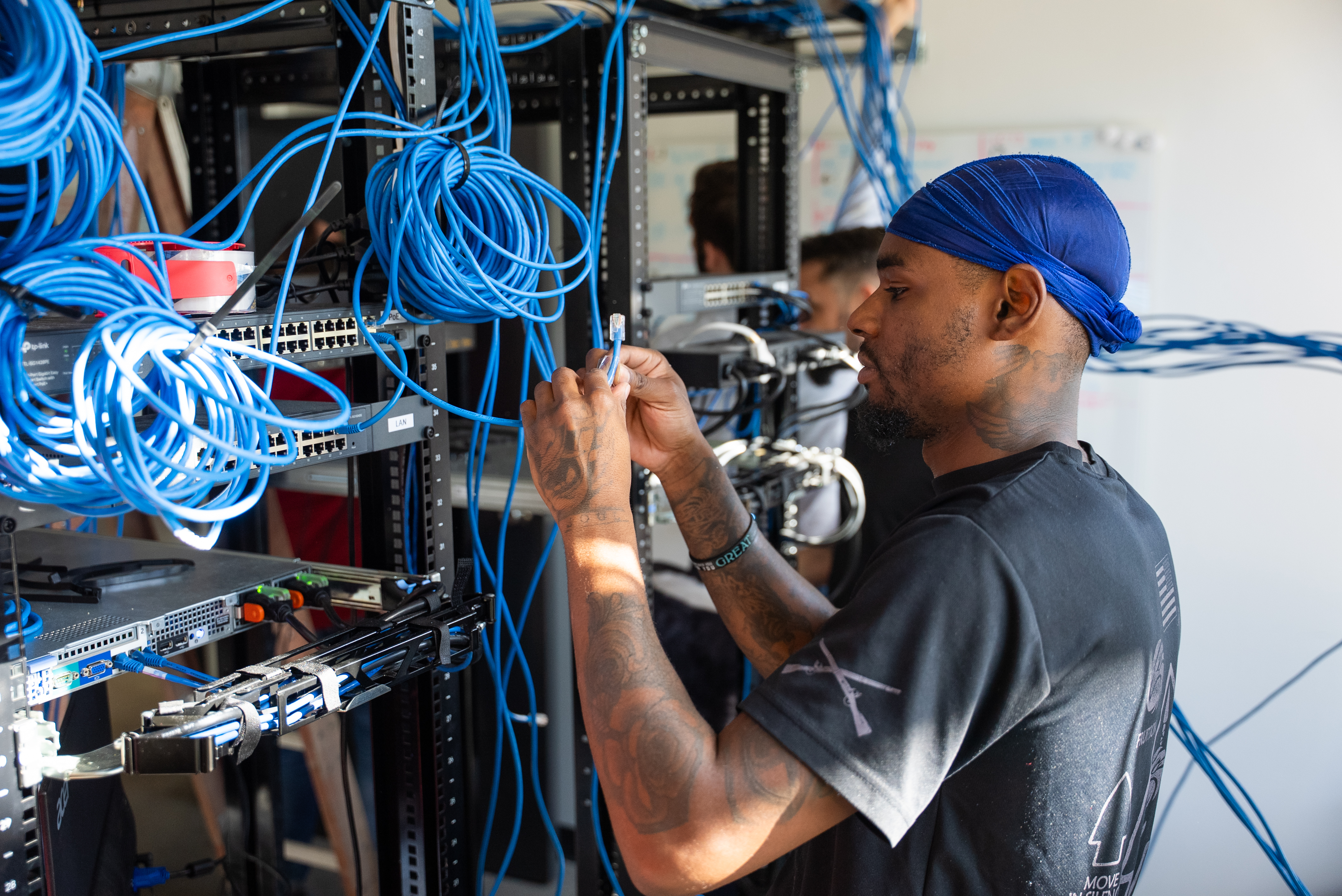
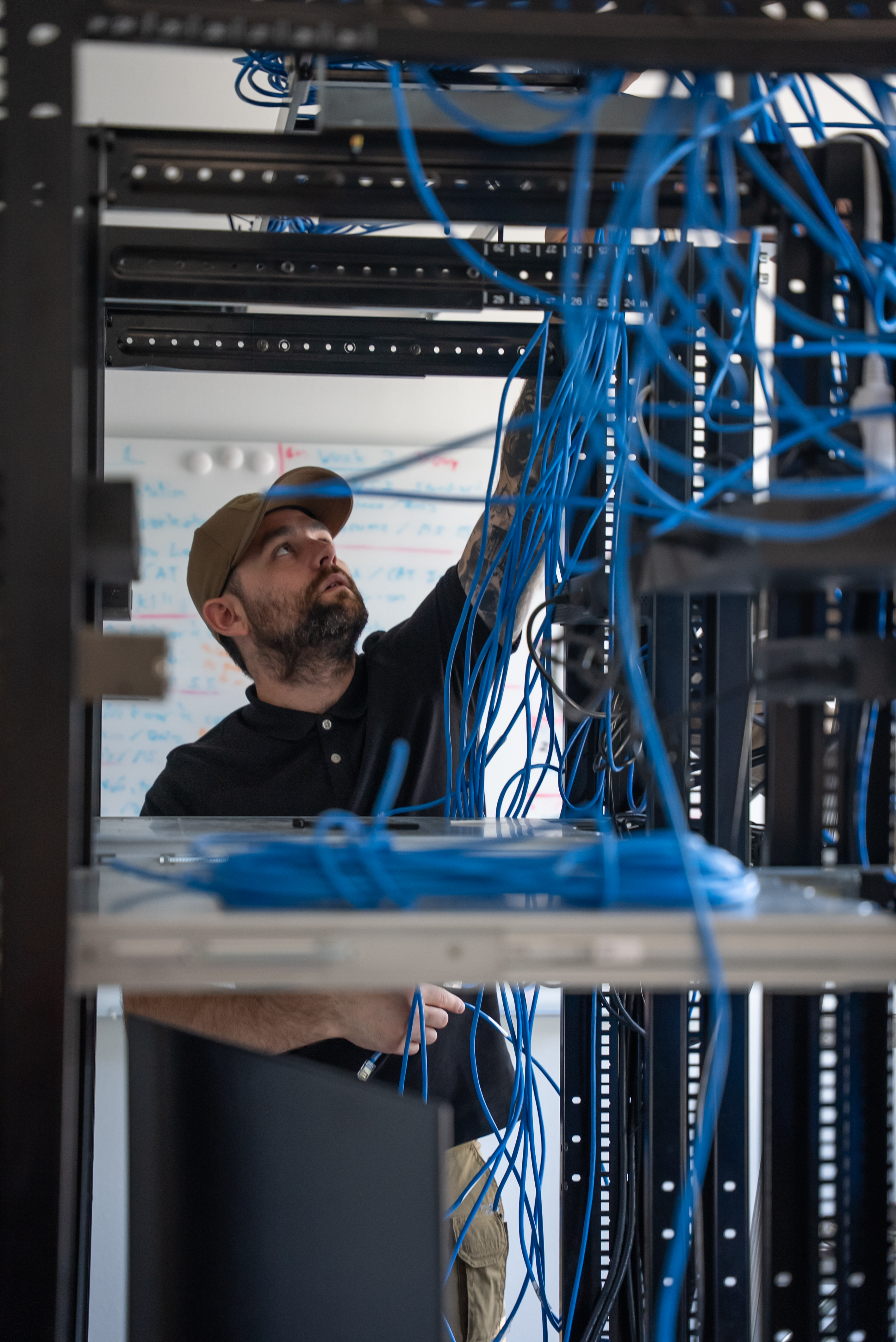
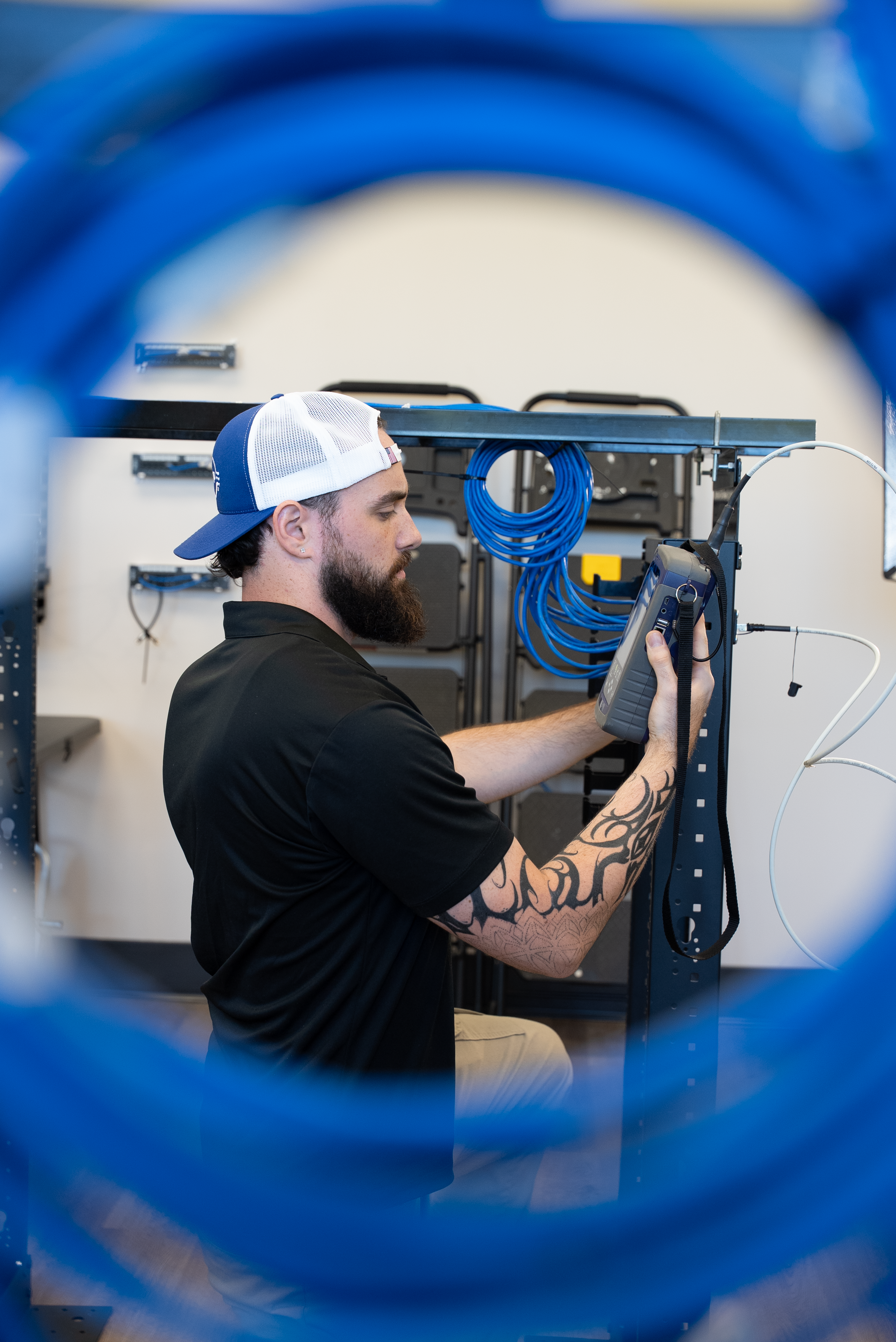
Instruction is delivered through classroom lectures, hands-on labs, and DCIM/monitoring platform exercises. Classroom lectures introduce foundational concepts in data center topology, availability and redundancy, power distribution, and cooling strategies. Hands-on labs give students supervised practice with real data center infrastructure, including server racks, PDUs, UPS/battery systems, fusion splicers, and copper/fiber test equipment. DCIM platform exercises allow students to practice monitoring power, cooling, and asset data using the same tools used in production data center environments.
ASSESSMENT
Student learning is evaluated through written examinations, practical skills demonstrations, graded lab exercises, and a capstone project. Written exams measure understanding of data center design principles, redundancy models, and infrastructure fundamentals. Practical demonstrations and graded exercises assess the student's ability to install and configure racks, PDUs, cabling, and monitoring systems to industry standards. The program concludes with a capstone row build, turn-up, and acceptance project in which students complete a full infrastructure build and testing cycle, demonstrating mastery of the skills required for entry-level data center technician roles.
CAPSTONE · BDC126 · 24 HRS
Row Build, Turn-Up & Acceptance
Teams plan and execute a mini-row build: set racks and containment, land power and network, dress fiber/copper, certify links, validate monitoring, and run a MOP with evidence.
The final deliverable is an acceptance packet with photos, panel schedules, port maps, OLTS/OTDR reports, and change records—demonstrating production-ready skills.
LAC vs. Traditional Universities
Compare the Difference
In 400 hours, the Broadband Data Center Technician program takes you from data center fundamentals through hands-on labs to a full row build, so you graduate with the skills and habits employers expect on day one.
Apply Now