ABOUT OUR PROGRAM
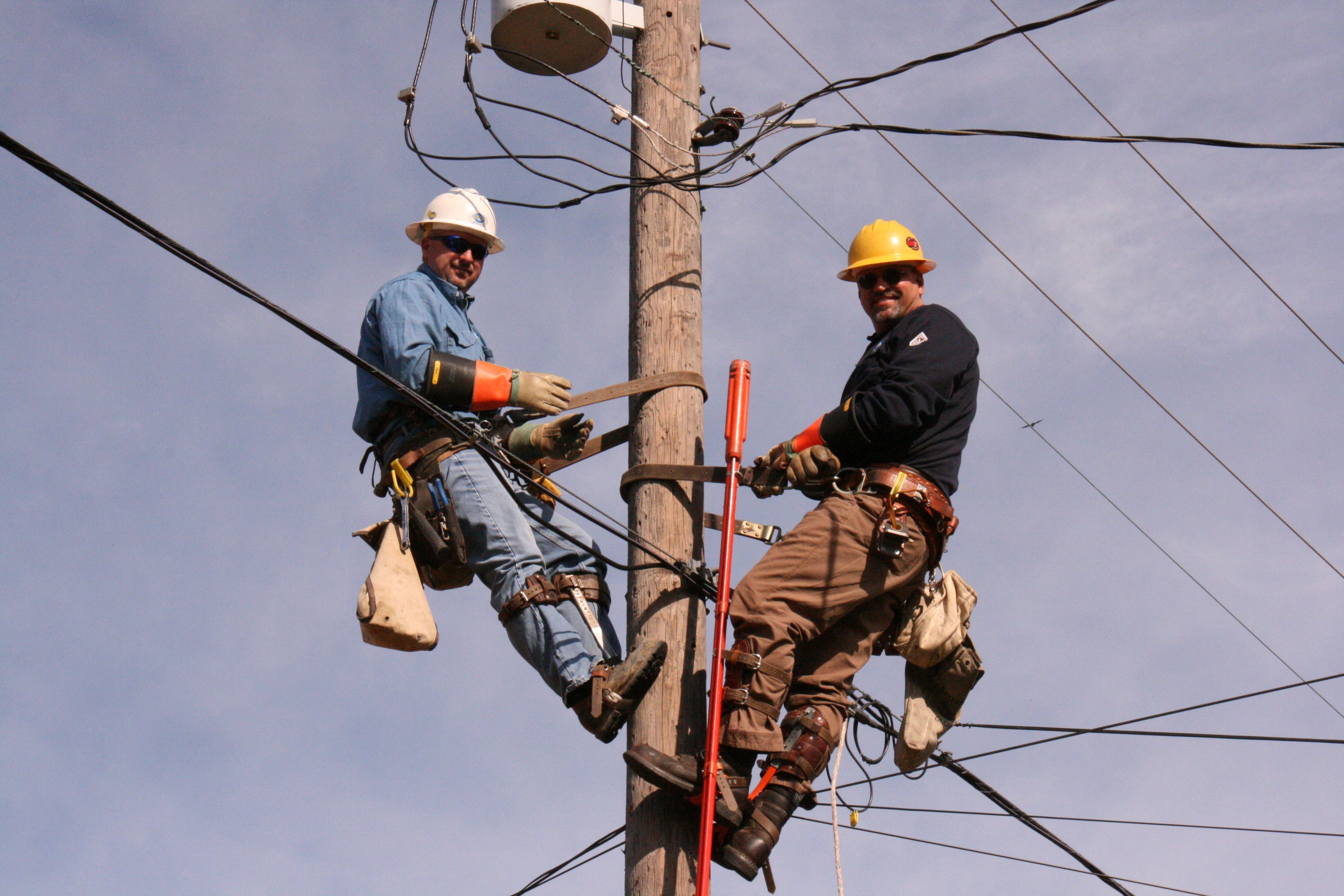
Telecommunications Technician (400 hours) is a hands-on, crew-ready program that blends wireless, fiber, and power fundamentals so graduates can contribute on day one across tower, rooftop, OSP/ISP, and edge environments. Training builds a safety-first mindset with OSHA-10–contextualized field practices, RF/EME hazard controls, at-height work and assisted rescue, rigging and hoisting, ropes and material handling, and disciplined job planning (SOW, JHA/JSA, permits, and site communication). Learners work to current structural and lifting standards and develop clean documentation habits from the start.
Technical blocks progress from grounding/bonding and exothermic welding to DC power plants (rectifiers, distribution, batteries), coax/copper line work, and antenna systems—alignment, weatherproofing, line sweep, and PIM basics—before moving into LTE/5G site readiness, in-building/DAS and small-cell fundamentals, and data center/edge installations. The fiber track covers theory and components, cable prep and closures, fusion splicing, Tier-1/Tier-2 testing (OLTS/OTDR), OSP make-ready, and ISP pathways. Throughout, students practice closeout essentials (labels, photo logs, redlines, test packets), integrated troubleshooting across fiber/RF/power, project flow and QC, and customer-facing communication.
Teams plan a job and JHA, stage materials, execute safe climbs and controlled lifts, install and dress fiber and RF lines, align and weatherproof antennas, activate and test services, and deliver an inspection-ready closeout package. Graduates leave prepared to step onto carrier, contractor, or enterprise crews as versatile telecom technicians, bringing safety, workmanship, documentation, and schedule discipline to every site.
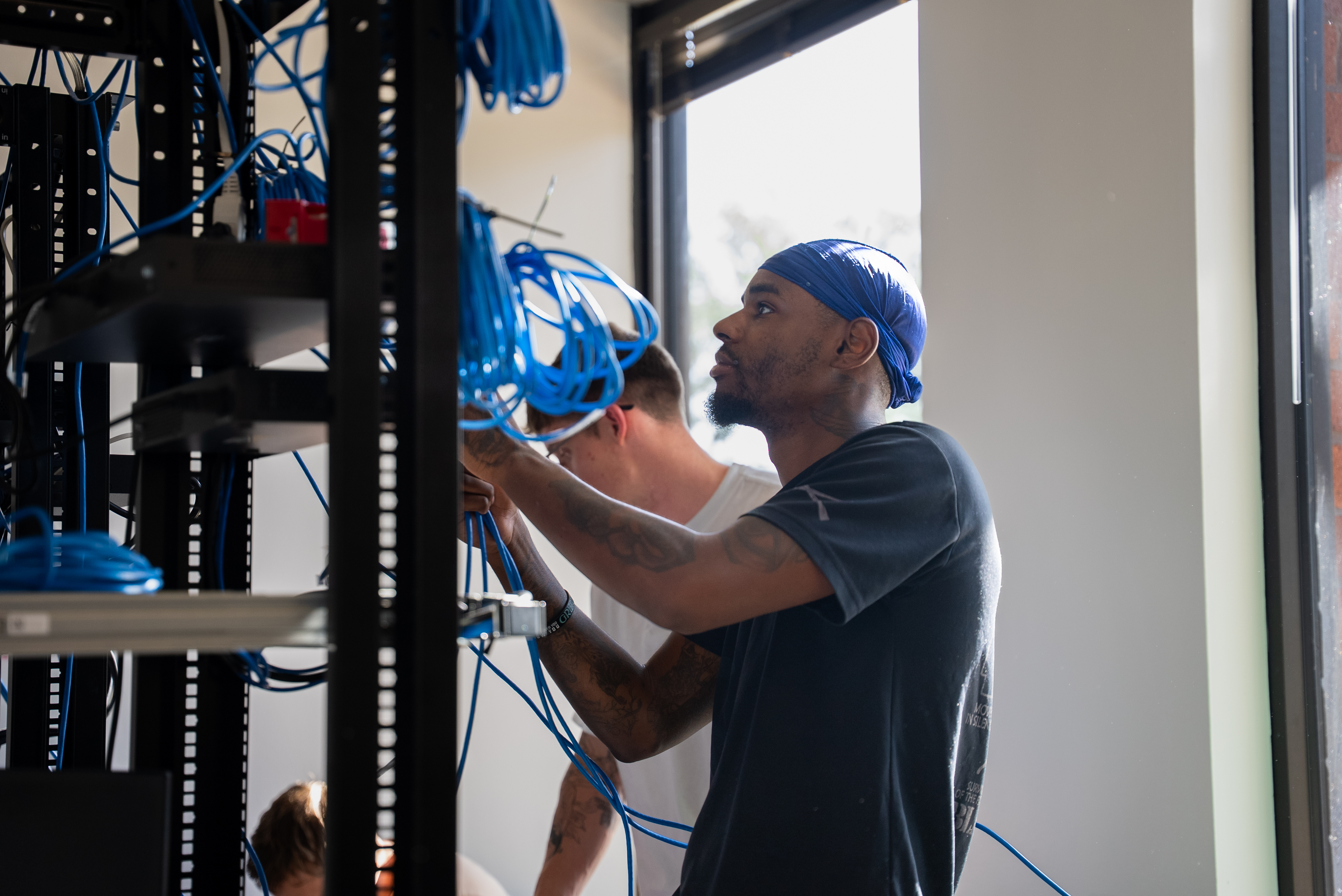
BUILD THE FUTURE OF TELECOM
Train for Crew-Ready Roles in Wireless, Fiber & Power
Start your journey toward a career as a versatile telecom technician.
Where Graduates Work
Graduates are prepared to step onto carrier, contractor, or enterprise crews as versatile telecom technicians. Every course builds the safety, workmanship, documentation, and schedule discipline that crews expect on day one.
SAFETY, CLIMBING & RIGGING
OSHA-10 field safety, RF/EME hazards, at-height work and rescue, rigging, hoisting, and job documentation.
TT-200 – TT-208
WIRELESS, RF & POWER SYSTEMS
Grounding and bonding, coax and RF lines, antenna alignment and sweep, LTE/5G, DAS, small cells, data center/edge, and DC power.
TT-209 – TT-216
FIBER OPTICS
Fiber theory, connectorization and closures, fusion splicing, OTDR/OLTS testing, OSP make-ready, and ISP pathways.
TT-220 – TT-225
CLOSEOUT, QC & TROUBLESHOOTING
Closeout packages, redlines and as-builts, crew communication, project flow, and integrated fiber/RF/power troubleshooting.
TT-230 – TT-233
CAPSTONE: INTEGRATED TELECOM BUILD
A start-to-finish mini-site, from job plan and climbs to activation, testing, and closeout.
TT-240
Program Curriculum
28 courses · 400 clock hours · Select a course to see what you'll learn.
TT-200Orientation & Career Readiness4 hrs
Students get the big picture of modern telecom work—wireless, fiber, and power—and how crews coordinate tasks, documentation, and safety to deliver a site on schedule. We set expectations for professionalism, tool care, radio etiquette, and quality standards, and preview how skills will be assessed through labs and the capstone.
TT-201OSHA-10 & Field Safety Essentials20 hrs
This course contextualizes OSHA-10 construction topics for tower yards, rooftops, data rooms, and right-of-way work. Learners practice hazard recognition, PPE selection, heat/cold stress controls, housekeeping, ladder/scaffold basics, and clear stop-work communication.
TT-202RF/EME Hazard Awareness & Controls8 hrs
Technicians learn how RF energy is produced, how exposure is assessed, and how to apply signage, zones, lockout, and time-distance-shielding controls. They interpret site RF plans, coordinate with landlords and carriers, and use basic survey tools to plan safe work routes around active antennas.
TT-203Standards & Structures (ANSI/TIA-222 & ANSI/10.48)12 hrs
This module explains how structural standards drive mount selection, antenna/feedline loading, bolt patterns, and safe lifting practices. Students read drawings, identify attachment points, understand rigging restrictions, and document redlines that keep the build compliant from pre-task planning through closeout.
TT-204At-Height Work & Rescue Operations32 hrs
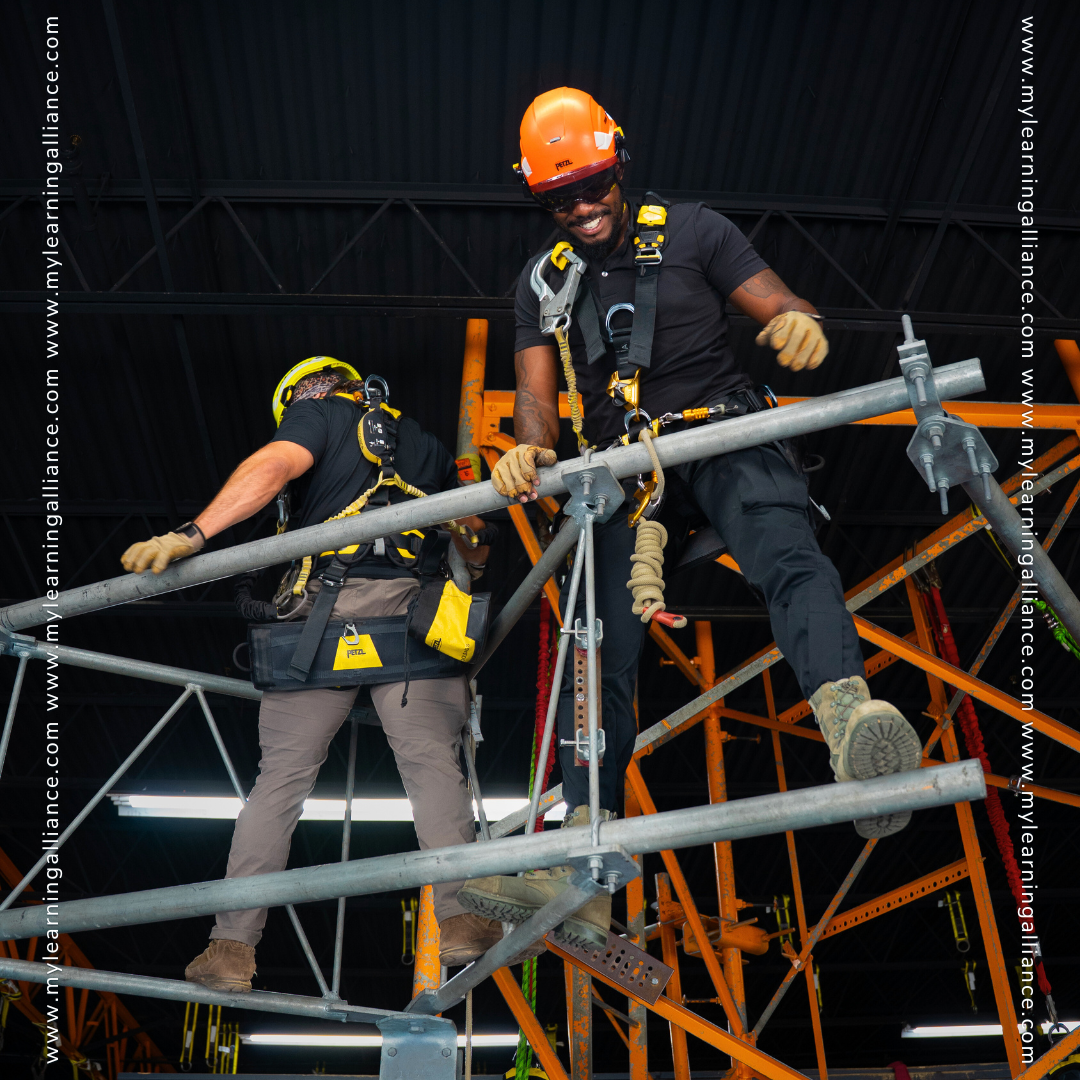
Learners size, inspect, and don harnesses; select anchors and connectors; and climb/position safely on towers and elevated structures. Dropped-object prevention, ladder systems, controlled access zones, and assisted-rescue methods are drilled on a training structure until teams can execute clean, rehearsed rescues.
TT-205Rigging & Hoisting for Telecom Lifts16 hrs
Students plan and conduct controlled lifts for lines, antennas, and small equipment using hoists and taglines. They choose and inspect slings and hardware, find center of gravity, manage load paths, and communicate with standard signals—integrating structural notes and exclusion zones into every pick.
TT-206Ropes, Knots & Material Handling12 hrs
This hands-on block builds speed and accuracy with knots, hitches, and terminations used for hauling, securing, and edge protection. Learners stage materials, protect finished surfaces, and design simple mechanical advantages to move gear without damage or delays.
TT-207First Aid/CPR/AED8 hrs
Training focuses on the injuries and conditions most likely in telecom work: falls, lacerations, crush injuries, heat illness, and electrical shock. Students practice scene assessment, bleeding control, AED use, and clear hand-off to EMS, with documentation suitable for incident reports.
TT-208SOW, JHA/JSA & Job Documentation8 hrs
Technicians learn to read the scope of work, identify job hazards, and select controls in a concise JHA/JSA. They create daily tailboards, photo logs, and redlines, and they organize permit paperwork so inspections and hand-offs are smooth.
TT-209Grounding, Bonding & Exothermic Welding12 hrs
This course covers the purpose and practice of site grounding for RF, power, and lightning protection. Students prep conductors, lugs, and surfaces; execute exothermic welds and mechanical bonds; verify continuity; and label pathways so future maintenance is straightforward.
TT-210Telecom Systems & Services Overview16 hrs
Learners connect physical build tasks to the services they enable—voice/data, LTE/5G, microwave backhaul, enterprise fiber, and edge compute. We map equipment at a site (BBUs, radios, antennas, routers, rectifiers, batteries) to the signal and power paths the tech will install and test.
TT-211Coax/Copper Cabling & RF Line Practices16 hrs
Students handle and prepare coax and copper correctly—cutting, coring, connectorizing, weatherproofing, labeling, and securing with drip loops and support. They route lines to minimize PIM and water ingress, follow bend/tension limits, and document terminations for inspection.
TT-212Antenna Systems: Alignment, Weatherproofing & Sweep Basics16 hrs
This module covers antenna and mount assembly, azimuth/tilt/roll alignment, and precision weatherproofing. Learners perform basic line sweep and PIM checks to verify installation quality, interpret results, and close punch-list items before integration.
TT-213LTE/5G Site Fundamentals & Inspections16 hrs
Students learn the layout of a typical macro or rooftop site—RAN gear, fronthaul/backhaul, power distribution—and the commissioning checklist. They practice site readiness walks, identify common defects, and coordinate with carriers and landlords to pass inspections the first time.
TT-214In-Building/DAS & Small Cell Foundations16 hrs
This course introduces indoor coverage systems and small cells: head-end elements, passive/active components, cabling, and coordination with building trades. Learners pull and dress cable to aesthetic standards, protect fire-stopping, and document test points for later optimization.
TT-215Data Center & Edge Installations16 hrs
Technicians prepare racks and pathways, dress copper/fiber neatly, respect airflow and power separation, and label to site conventions. They install patch panels and rack PDUs, verify grounding/bonding, and complete basic turn-up tasks for edge compute or transport nodes.
TT-216DC Power Systems: Batteries & Rectifiers12 hrs
Students configure and maintain DC power plants—rectifiers, distribution, and VRLA/Li-ion batteries. They perform terminations, torque and polarity checks, verify alarms, and document test results, tying power quality directly to site reliability.
TT-220Fiber Optics: Theory & Components16 hrs
This foundation explains how light carries data, the differences among single-mode/multimode, and connector and cable types. Learners relate link budgets and loss to real installation choices and prepare for hands-on build tasks.
TT-221Fiber Cable Prep, Connectorization & Closures16 hrs
Students practice safe handling, jacket and buffer tube prep, mid-span access, connector end-face care, and closure/pedestal installation. Slack storage, strain relief, sealing, and labeling are emphasized to prevent water ingress and future outages.
TT-222Fusion Splicing Labs16 hrs
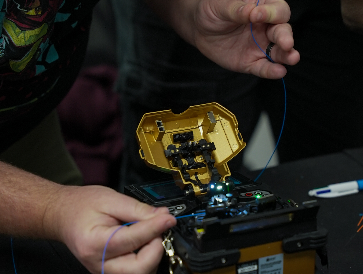
Hands-on labs cover splice tray organization, cleaving, alignment, arc settings, protection sleeves, and QC of splice loss. Learners build repeatable workflows that pass inspection and speed activation.
TT-223Fiber Testing & Activation (OTDR/OLTS)16 hrs
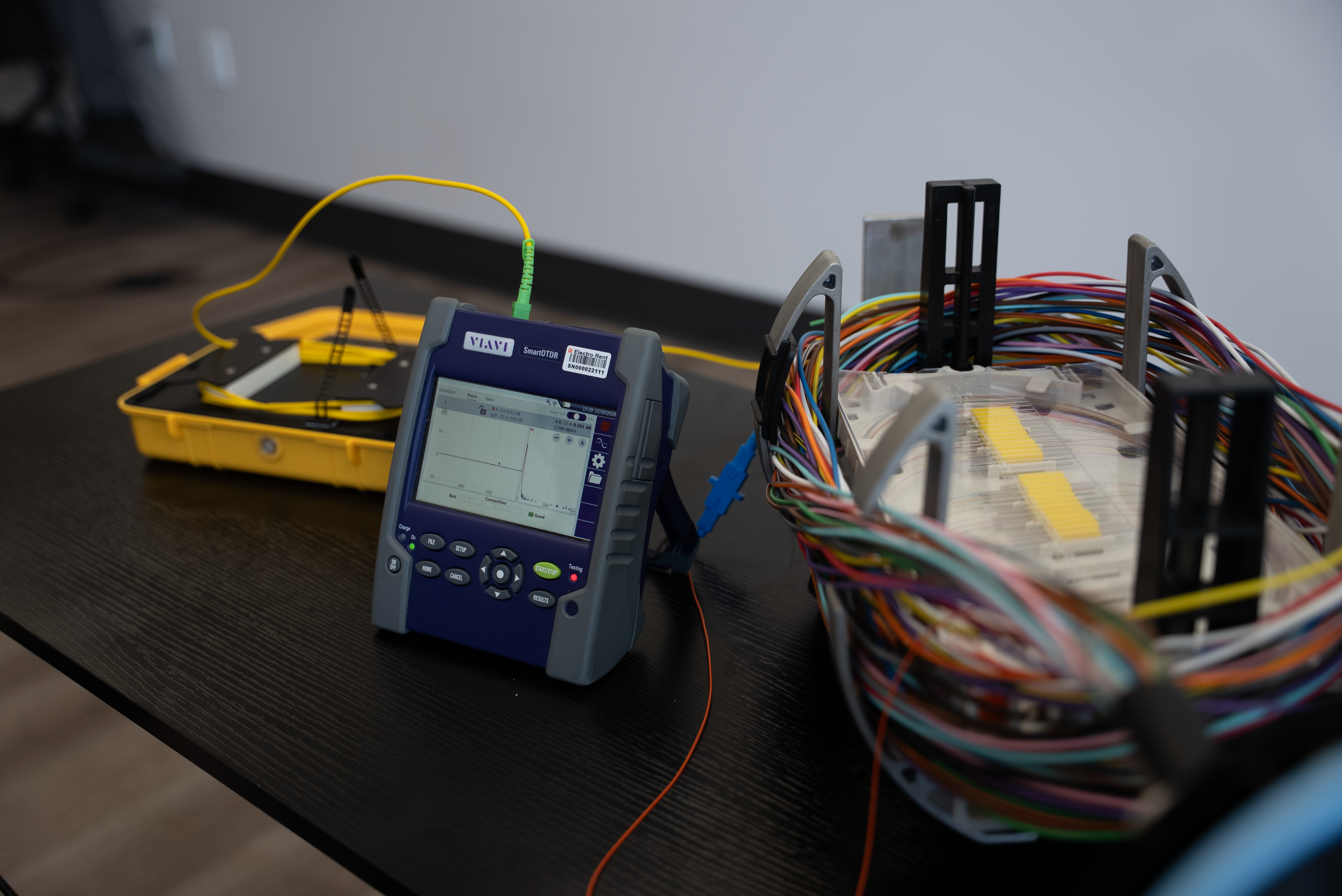
Technicians perform Tier-1 (OLTS) loss testing and Tier-2 (OTDR) event analysis with proper launch/receive fibers. They verify polarity and continuity, interpret traces, and assemble acceptance packets that stand up to customer review.
TT-224OSP Fiber Construction & Make-Ready12 hrs
This module introduces outside-plant build methods—handholes, duct/innerduct, aerial strand/lashing basics, slack loops, and make-ready coordination. Students plan traffic control and protection of existing plant, then document depth/offsets and assets for as-builts.
TT-225ISP Cabling & Pathways12 hrs
Learners install pathways—ladder rack, J-hooks, cable tray—and pull, dress, and secure cabling to spec. Fire-stopping, labeling, and aesthetics are stressed for landlord and AHJ satisfaction in active buildings.
TT-230Closeout Packages, Redlines & As-Builts8 hrs
Students compile a complete closeout: photo logs, test results, labels, redlines, and punch-list resolution with clear file naming and metadata. The goal is a package that speeds payment and future maintenance.
TT-231Power Skills: Crew Communication & Customer Interaction8 hrs
This course builds the soft skills that keep jobs moving—briefing the plan, clarifying roles, de-escalating issues, protecting property, and writing concise updates. Students practice professional interactions with site contacts, inspectors, and neighbors.
TT-232Project Flow & Quality Control8 hrs
Learners connect scheduling, staging, and material control to field productivity and rework avoidance. They use checklists and QC hold points to catch defects early and escalate risks before they hit the schedule.
TT-233Integrated Test & Troubleshooting (Fiber/RF/Power)12 hrs
In scenario labs, teams isolate faults across domains—dirty connectors, bad weatherproofing, misaligned antennas, grounding errors, mislabeled circuits—using the appropriate meters and test sets. They verify fixes and write corrective notes ready for the closeout package.
TT-240Capstone: Integrated Telecom Build36 hrs
Teams deliver a start-to-finish mini-site: plan the job and JHA, stage materials, perform safe climbs and lifts, install fiber and RF lines, align and weatherproof antennas, activate and test services, and compile a complete closeout packet. Performance is graded on safety, quality, documentation, communication, and schedule control—mirroring real carrier expectations.
How You'll Learn
INSTRUCTION
Instruction is delivered through classroom lectures, hands-on labs, and supervised field-style practicums. Classroom lectures introduce foundational concepts in electrical safety, RF/telecom theory, grounding and bonding, and fiber optic principles. Hands-on labs give students supervised practice with the actual tools and equipment used in the field, including antenna alignment gear, line sweep analyzers, fusion splicers, and OTDR/OLTS test sets. Supervised at-height and rigging practicums on the training tower allow students to safely apply climbing, rescue, and rigging techniques under direct instructor observation.
ASSESSMENT
Student learning is evaluated through written examinations, practical skills demonstrations, instructor observation checklists, and a capstone project. Written exams measure understanding of safety standards, telecom systems, and testing procedures. Practical demonstrations and checklists assess the student's ability to correctly perform tasks such as cable termination, splicing, and rigging to industry specifications. The program concludes with a capstone integrated telecom build in which students complete a full site installation and turn-up, demonstrating mastery of the skills required for entry-level telecommunications technician roles.
CAPSTONE · TT-240 · 36 HRS
Integrated Telecom Build
Teams deliver a start-to-finish mini-site: plan the job and JHA, stage materials, perform safe climbs and lifts, install fiber and RF lines, align and weatherproof antennas, activate and test services, and compile a complete closeout packet.
Performance is graded on safety, quality, documentation, communication, and schedule control—mirroring real carrier expectations.
LAC vs. Traditional Universities
Compare the Difference
In 400 hours, the Telecommunications Technician program takes you from classroom fundamentals through hands-on labs to a full site build, so you graduate with the skills and habits employers expect on day one.
Apply Now